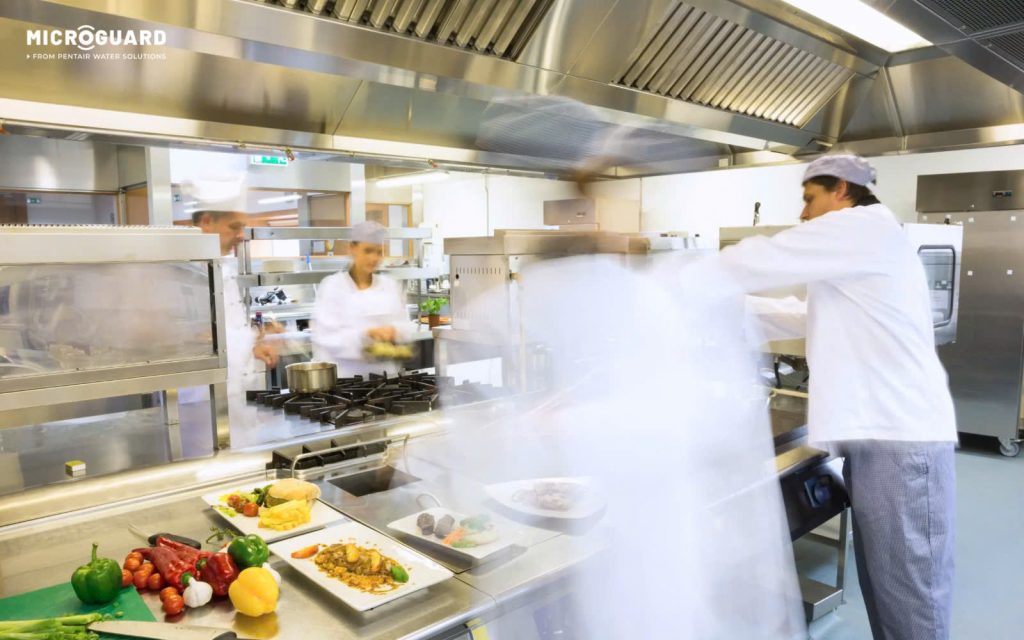
The One Kitchen Input You Cannot Afford to Overlook
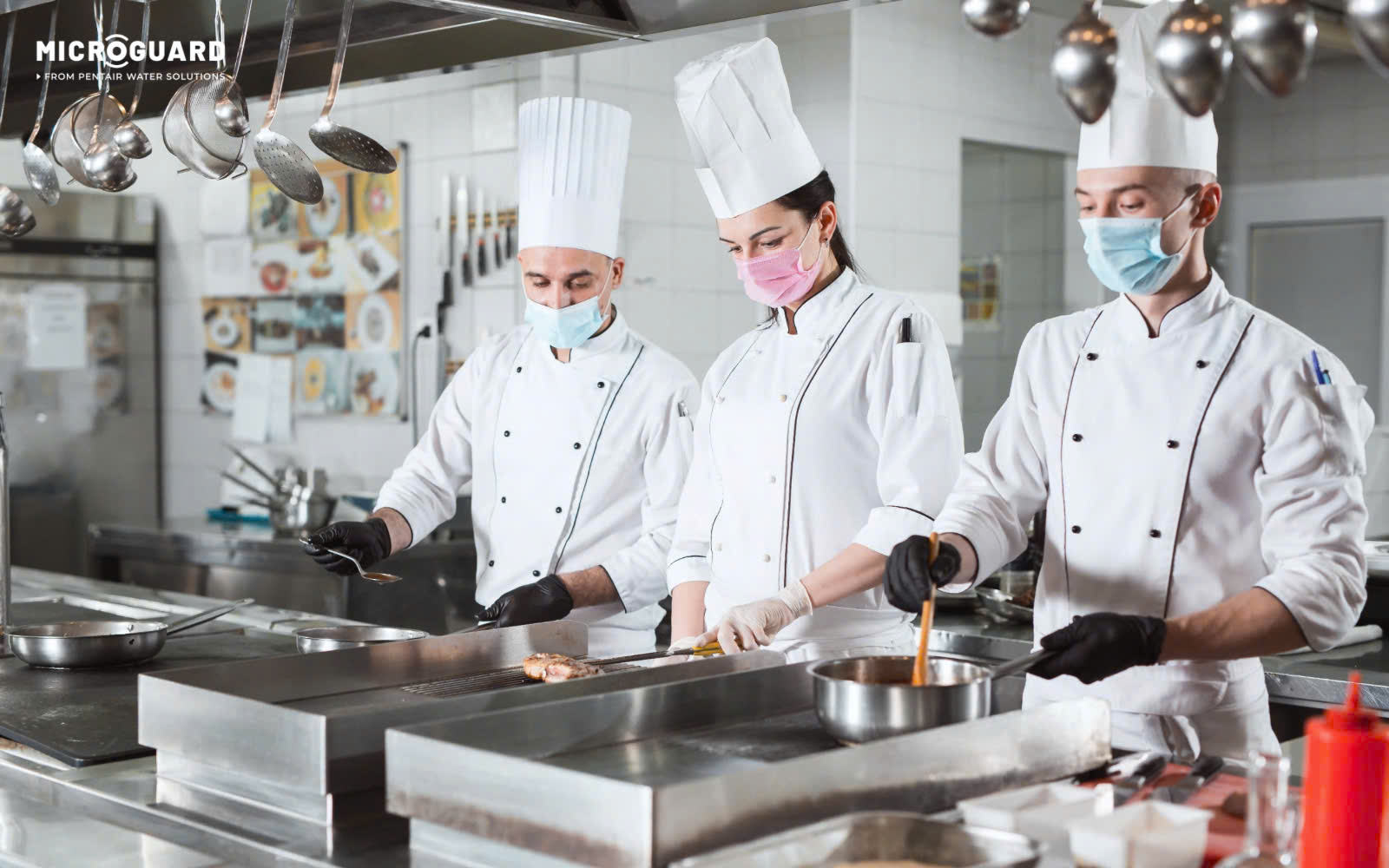
A professional restaurant runs on control.
Chefs specify ingredients, standardize recipes, monitor temperatures, time preparation and build processes around the demands of service. In a busy kitchen, consistency is not simply a culinary goal. It is what keeps food quality, workflow and service performance on track.
Yet one of the kitchen’s most heavily used inputs is often treated as a given: water.
The Cost of an Uncontrolled Input
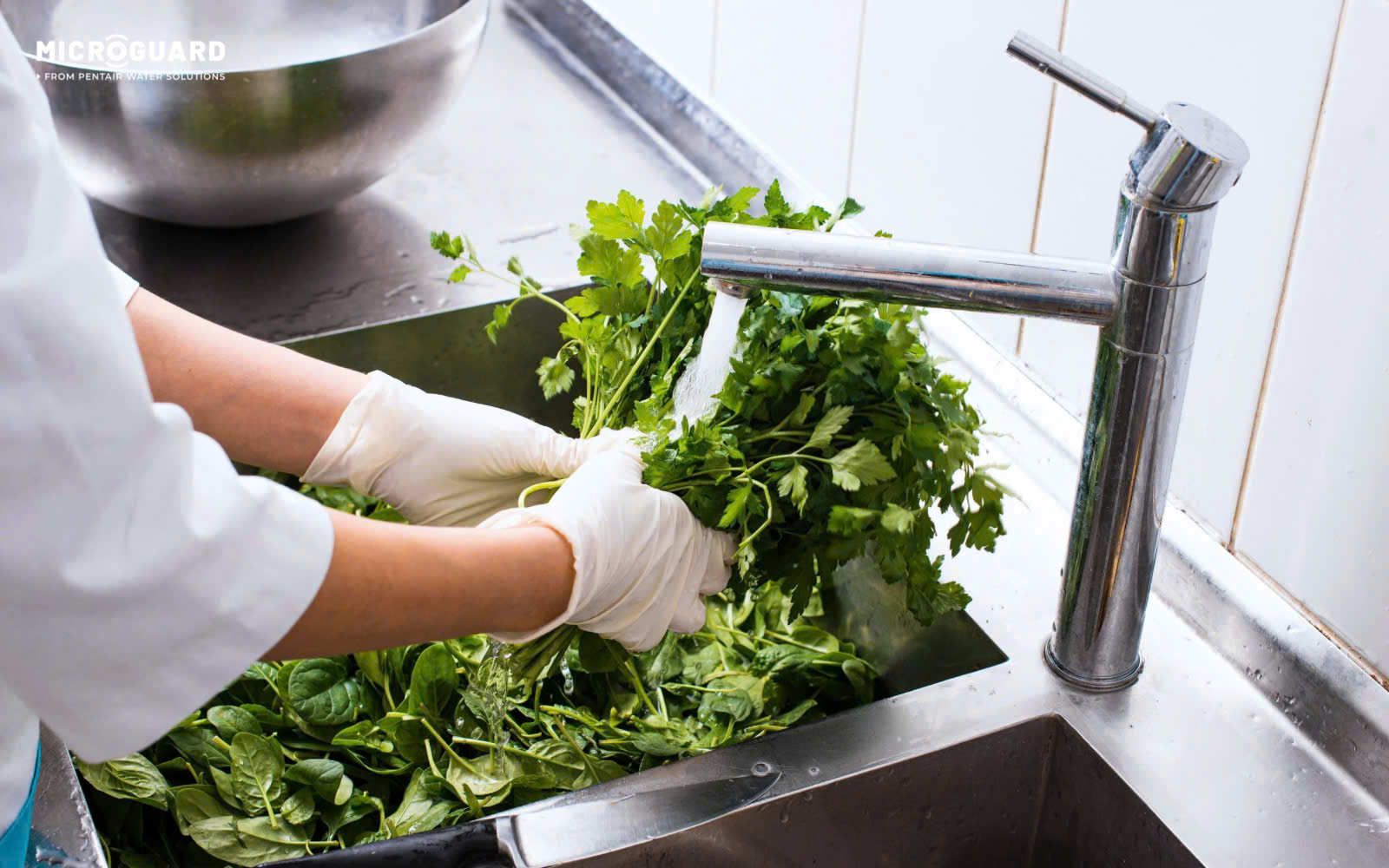
Water is involved in far more of the kitchen than what reaches the guest’s glass. It is used to wash produce, rinse ingredients, cook rice, prepare soups and sauces, and clean equipment and work surfaces.
That makes its quality and consistency relevant to daily operations.
When water contains unwanted particles, chlorine, minerals or other substances, the effects may not always be immediately visible. But over time, an uncontrolled water input can contribute to inconsistent batches, failed preparation and remakes when results do not meet the expected standard.
Mineral buildup can also create scaling inside boilers, steamers, dishwashers and other water-dependent equipment, affecting flow and performance while increasing cleaning and maintenance requirements.
In a high-volume kitchen, these issues add up – more time spent correcting batches, slower equipment, additional maintenance and avoidable operating costs.
Scaling Without Adding Unnecessary Variables
A single kitchen may absorb the occasional remake, descaling cycle or equipment issue. Across a growing operation, those same issues can multiply.
More locations mean more equipment, higher water demand and more teams working to the same standards. When water quality varies between sites, maintaining consistent preparation, equipment performance and maintenance becomes more difficult.
The issue is not that water quality determines whether a restaurant can grow. It is that an uncontrolled input adds another variable to an operation that is already becoming more complex.
As businesses scale, controlling those variables becomes essential to keeping processes consistent and teams focused on higher-priority operational demands.
Water Quality Is Everyone’s Business
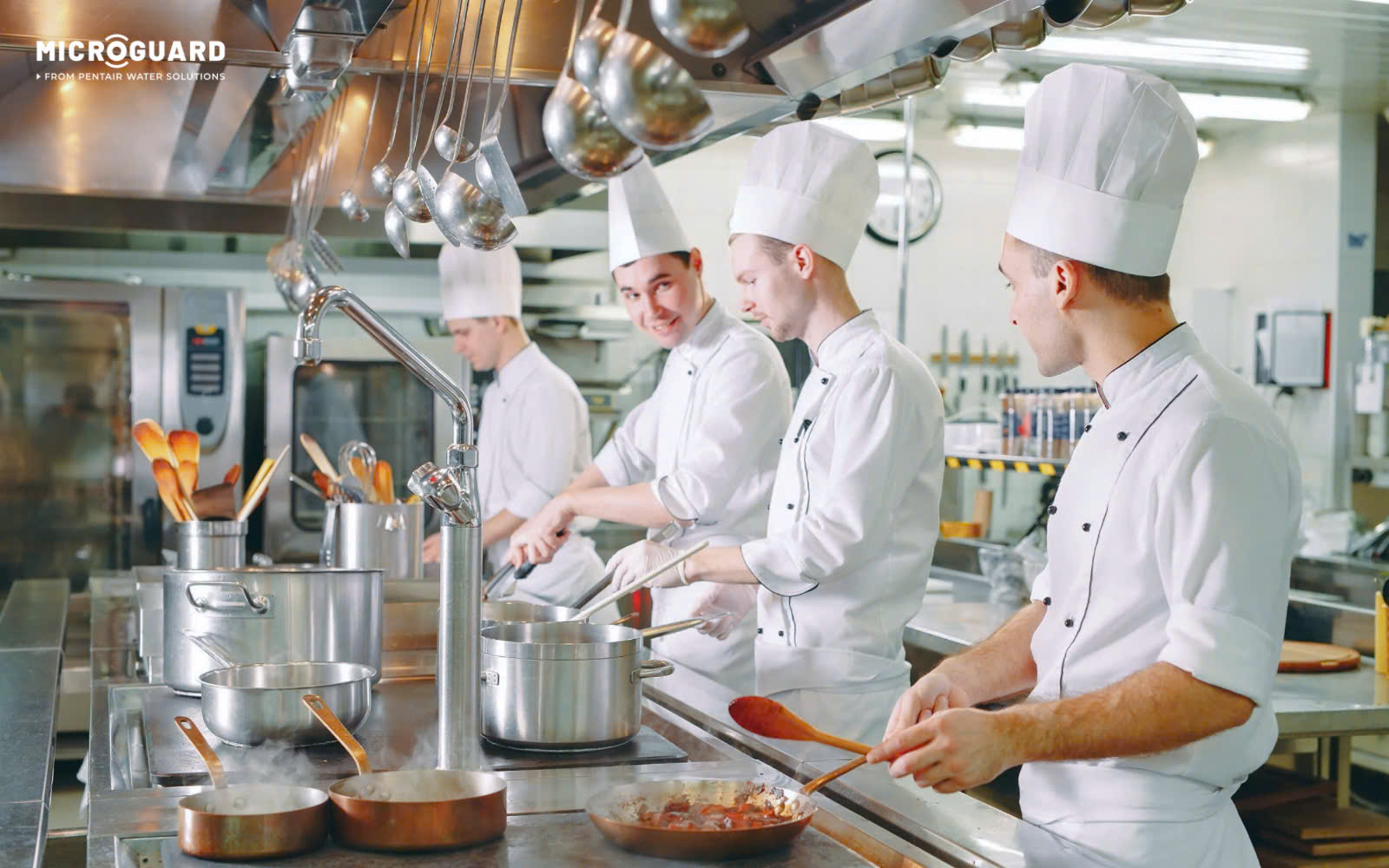
Water quality may seem like a back-of-house concern. Its impact, however, can reach the entire operation.
From the kitchen team managing preparation and equipment to front-of-house delivering the guest experience, everyone depends on processes running consistently. Remakes, slower service, equipment issues and unexpected maintenance can quickly move beyond the kitchen and affect time, cost and service.
Water may be behind the scenes, but its hidden costs are felt across the business.
Control the Input Before It Becomes a Problem
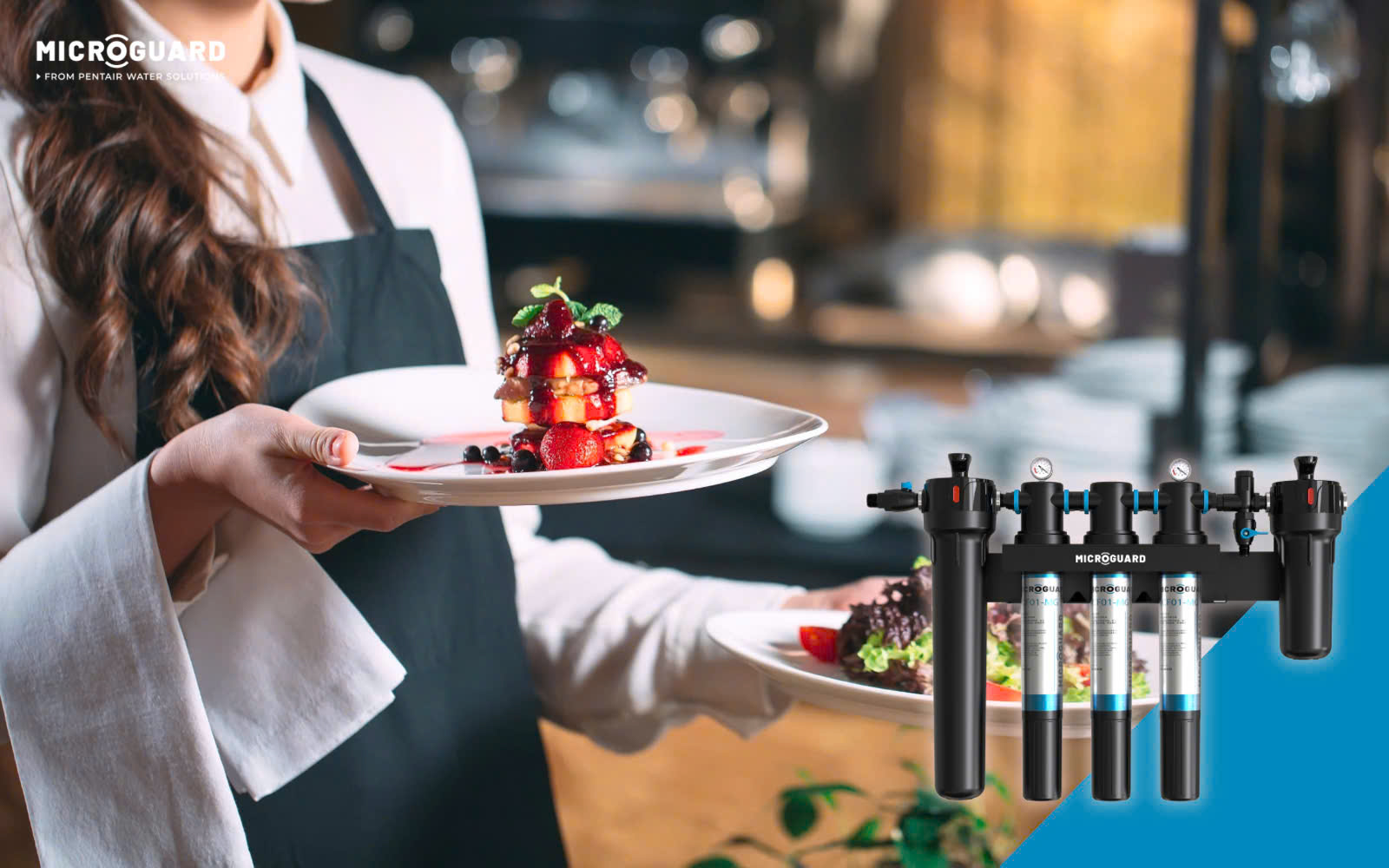
Microguard is designed for the demands of professional kitchen operations, where water needs to be treated consistently without compromising flow or workflow.
Its submicron filtration provides fine-level filtration, while high-flow capacity is built to support demanding kitchen applications. Superior chlorine reduction further helps improve the quality of water entering food preparation and other critical processes.
The technology is backed by Pentair, with more than 90 years of experience in water treatment and filtration. Together, these capabilities provide a practical way to bring greater control to an essential kitchen input – helping reduce unnecessary variables as operations grow.
Build a more controlled kitchen. Start with the water.